Posts

Showing posts with the label lowlands

Hill of Crosses (Lithuania)

Image
Hill of Crosses (Lithuanian: Kryžių kalnas) is an incredible and magic site about 12 km north of the city of Šiauliai. It is a major site of Catholic pilgrimage in Lithuania. The first crosses were placed on the former Jurgaičiai or Domantai hill fort after the 1831 Uprising.  After the 3rd partition of the Polish–Lithuanian Commonwealth in 1795, Poland and Lithuania became part of the Russian Empire. Poles and Lithuanians unsuccessfully rebelled against Russian authorities in 1831 and 1863. Families could not locate bodies of perished rebels, they started putting up symbolic crosses in place of a former hill fort. Several generations of Catholics from Lithuania, Poland and all over the world brought here not only crosses and crucifixes, but statues of the Virgin Mary, carvings of Lithuanian patriots and thousands of tiny effigies and rosaries have been brought here by Catholic pilgrims.  The site took on a special significance during the years 1944–1990, when Lithuania was oc...

Garden-City Podkowa Leśna

Image
Podkowa Leśna (literal meaning - "Horseshoe Grove", in full: Miasto-ogród Podkowa Leśna - "Garden-City Podkowa Leśna") is a town in central Poland, in Grodzisk Mazowiecki County, (Masovian Voivodeship). The town is located not far from Warsaw in a beautiful setting of the Młochowskie Forests. Forests surround the town from three sides (the east, the south, and the north). The area where is situated Podkowa Leśna, since 1861 belonged to industrialist and hunter Stanislaw Lilpop. The creation of the town was connected directly to the Electric Railroad. The line was constructed and operated under the original name "Elektryczne Koleje Dojazdowe" (Electric Commuter Rail) by a privately owned electrical power industry consortium "Siła i Światło" (Power and Light) established with the participation of British capital shortly after Poland regained independence after World War I in 1918. "Garden-City Podkowa Leśna" was based on 1...

Summer beginning

Image
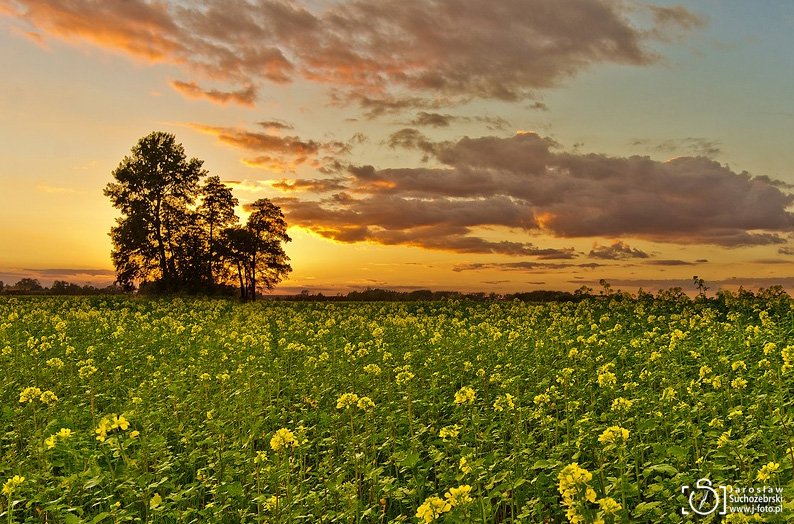
Summer in Poland starts in June and is typically the warmest and brightest season of the year. The month of June is the strawberry season in Poland. You will find them everywhere. From strawberry smoothies and strawberry pierogi, to being sold at outdoor markets.  July is supposedly the hottest month of the year, however, there is a possibility of a mild summer, when it winds from the West. Then it can be pretty cold and wet. But usually, they are good solid summers. The average temperatures are 25 degrees Celsius, which makes this season the best moment to travel and enjoy the beauty of Poland.  *  *  * This post is linked at:  Through My Lens  -  Our Word Tuesday  -  Image-in-ing  - ABC Wednesday -  Wordless Wednesday  -  Wednesday Around The Word -  Outdoor Wednesday  -  Photo Friday -  Skywatch Friday  -  Weekend Travel Inspiration   -  My Sunday Photo -...

Moritzburg Castle - beautiful example of Saxon Baroque style

Image
About 13 kilometres north-west of the Dresden is located Baroque castle Morizburg. It is one of the most picturesque castles in Saxony, Germany. The castle lies on a symmetrical artificial island and has four round towers that beautifully reflect in the blue water of the pond. It is named after Duke Moritz of Saxony, who had a hunting lodge built in the Renaissance style on a granite dome in 1542. The surrounding woodlands and lakes have been a favourite hunting area of the electors and kings of Saxony.  Between 1661 and 1671 the Baroque chapel was added to the castle. The chapel was consecrated in a Catholic rite in 1697 during the coronation of Augustus the Strong to the King of Poland.  Augustus the Strong in 1723 began the large renovation work from Renaissance to Baroque hunting and pleasure palace. During the reconstruction works the large pond surrounding the castle’s artificial island was built from what was originally four smaller ponds. One alley runn...

Palace in Mała Wieś - beautiful monument of classicism in Poland

Image
Mała Wieś is a small village located 50 km south of Warsaw, near Grójec. In the village is located a beautiful palace surrounded by an English-style park, a French garden, as well as a fruit farm, and ponds. The facility is located on the edge of the larch reserve. The palace is one of the most beautiful monuments of classicism in Poland, which after the renovation is returning to its former glory. History The palace in Mała Wieś was built in the end of 18th century on the place of the wooden manor house of Walicki family. The Walicki family distinguished by their great patriotism. Bazyli Walicki was the voivode of Rawa Voivodeship and participant of the Four-Year Sejm. Bazyli, and friend and counsellor to Polish King Stanisław August Poniatowski, begun a tradition of hosting distinguished and famous individuals in the palace. The king himself have visited palace in Mała Wieś. The Palace has been owned by the same family for 159 years. Later on, it was owned by such ...

Azalea and Rhododendron Park in Kromlau, Germany

Image
Kromlau is a small and charming village located in the municipality of Gablenz, Germany, less than 6 kilometres from the Polish border. In Kromlau is one of the largest landscape parks in Saxony. The park lies in the Muskau Arch area (learn more at:   Muskau Arch - UNESCO Global Geopark ).  The park is a beautiful example of an English garden and has many small ponds and lakes. The Azalea and Rhododendron Park in Kromlau was commissioned by Friedrich Herrmann Rötschke, the knight of Kromlau, in the middle of the 19th century.  The Rötschke's landscape park was created after location of Fürst-Pückler-Park in Muskau ( lick learn more at: Muskau Park - World Heritage Site ) . The "little Pückler" spared a little bit of money. Rare woody plants, mythological and rococo statues, basalt caves as well as a bow bridge of stone blocks and basalt stone were design elements of his park. He also built the hunting lodge in the park and surrounded it with flower beds....
Related Posts Plugin for WordPress, Blogger...

Most Recent Articles

See Also