Posts

Showing posts with the label Wrocław

One night in Wrocław

Image
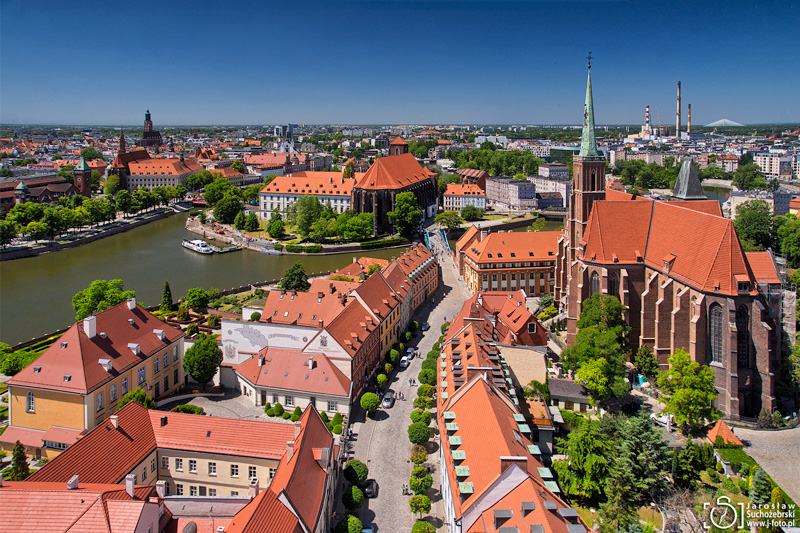
Old Town Square - Historic Centre of Wrocław Wrocław - the city on the banks of the River Oder, is the historical capital of Lower Silesia. It is one of the oldest cities in Poland. At various times in history, it has been part of the Kingdom of Poland, Bohemia, Hungary, the Austrian Empire, Prussia and Germany. Today Wrocław is the fourth-largest city in Poland and it is the capital of Lower Silesian Voivodeship. Old Town Square Wroclaw looks like a city built on water. Located on the Oder River, the city is unique in that it has 12 islands and 112 bridges. Wroclaw's water node has complicated structure. It includes the 3 main riverbeds of Odra and a lot of channels which are located in the centre of town. It is the largest in Poland and one of Europe's largest system of waterways and hydraulic structures, located in the metropolitan area. That’s why Wrocław is also called the Venice of the North. University Square Wrocław is the city of dwarves. The stre...

"There is no freedom without dwarves". The story of Wrocław’s dwarfs

Image
Since the beginning of the 21st century in Wrocław began to appear dwarfs figurines made of bronze. Figurine of a dwarf is the symbol of the Orange Alternative. It was the most picturesque element of Polish opposition to communism. The main purpose of Orange Alternative was to offer an alternative way of opposition against the authoritarian regime by means of a peaceful protest that used absurd and nonsensical elements. The first actions of the Orange Alternative consisted of painting dwarf graffiti on spots created by the police's covering up anti-regime slogans on walls of the Polish cities. They created often surrealistic slogans such as "There is no freedom without dwarves".  Orange Alternative organized happenings in several Polish cities. The culmination point in the movement's history was the action organized on International Children’s Day (1st June 1988), known as the "Revolution of Dwarves", during which more than 10 thousand people march...

The Centennial Hall in Wrocław

Image
The Centennial Hall (Polish: Hala Stulecia) in Wrocław (Poland) was constructed according to the plans of architect Max Berg in 1911–1913, when the city was part of the German Empire. The cupola was made of reinforced concrete, and with an inner diameter of 69 m and 42 m high it was the largest building of its kind at the time of construction. The symmetrical quatrefoil shape with a large circular central space seats 7,000 persons. The Hall became a key reference for the development of reinforced concrete structures in the 20th century. In 2006 the building was listed as a UNESCO World Heritage Site.  The Centennial Hall lies close to popular tourist attractions, such as the Wrocław Zoo, the Japanese Garden, and the Pergola with its Multimedia Fountain and is frequently visited by tourists and the local populace.

Old Town Hall of Wrocław - architectonic details

Image
See:  Old Town Hall of Wrocław , Wrocław - The Meeting Place

Old Town Hall of Wrocław

Image
The Old Town Hall of Wrocław is one of the largest town halls in Poland. It stands at the center of the city’s Market Square and is one of the main landmarks of the city. Wrocław Town Hall is a fine example of bourgeois Gothic architecture. The building was developed over a period of about 250 years, from the end of 13th century to the middle of 16th century. The Old Town Hall's long history reflects developments that have taken place in the city since its initial construction. The structure and floor plan changed over this extended period in response to the changing needs of the city. The current form with ornaments on the Eastern and Southern facades dates from the late 15th. The Old Town Hall is famous for its astronomical clock from 1580 and the 66 metre high tower. The building escaped relatively unscathed after World War II. After reconstruction work, in years 50th, it was re-opened as the Museum of Burgher Art. Tourists are allowed to see the splendid Gothic interi...

Wrocław - The Meeting Place

Image
The city of Wrocław originated at the intersection of two trade routes, the Via Regia and the Amber Road. At various times in history, it has been part of the Kingdom of Poland, Bohemia, Hungary, the Austrian Empire, Prussia, and Germany. Wrocław is the historical capital of Silesia and Lower Silesia. Today, it is the capital of the Lower Silesian Voivodeship, Poland. Wrocław is the modern and dynamic city. It is classified as a global city by GaWC, with the ranking of high sufficiency and living standard. Wrocław was among 230 cities in the world in the ranking of the consulting company Mercer - "Best City to Live" in 2015. It is also in the top ten places to visit in the ranking of the British newspaper The Guardian. In 2016, the city will be the European Capital of Culture and the World Book Capital.  Wrocław is full of attractions. Most of the city's main tourist attractions are located directly in the center. Most of them is accessible by foot. The oldest,...
Related Posts Plugin for WordPress, Blogger...

Most Recent Articles

See Also